Thirty-four


Lydia LunchSmoke in the Shadows (Atavistic)

A very individual album, from the ever-individual and divine Ms. Lunch, this continues her love for the noir-esque sound. In fact, considering the almost ‘Sin City’ aesthetic, this would be very much a capturing of the zeitgeist in mid 2005.

Sexy as ever, she purrs threats and narrative over sultry piano and the occasional stab of blazing brass, and it never gets old. Much like peers Jim Thirlwell or Michael Gira, Lydia has her identity down pat and works it perfectly.

Songs like ‘Trick Baby’ push the credibility a tad, but they are at the very least fun digressions from the sleazy main course. Final song ‘Hot Tip’ restores the mood to close, and Smoke in the Shadows is yet another satisfying serving of Lunch.

Thirty-five


CageHell’s Winter (Def Jux)

This is something of a signature Def Jux album. There are apparently numerous producers featuring on this HipHop album, but it has a very traditional (if that term can be used for such bruising, claustrophobia-inducing, low-bitrate texturing) El-P sound to it. I have been informed that DJ Shadow produced a track, but smooth, poignant Endtroducing… this is not.

This is, however, a very political album. Cage rails against the machine of the government, as well as dissing ‘deadbeat dads’. Jello Biafra guests on ‘Grand Ol’ Party Crash’ with what should be an amusing impersonation of George W. Bush, but which actually turns out to be slightly embarrassing. There is something of the drunk uncle at a wedding in the usually killer Biafra’s attempt at making like Rory Bremner. As if one wasn’t enough.

This works as a whole, though. Like the CYNE album, this is good but in no way a classic, and as such finds much company from 2005. This is definitely not the second coming of Cannibal Ox, but passes the time well and has a great, brutal HipHop sound to it. Again, though, the ugly question raises its head: does time, and development, just stop after 2001? I blame September the 11th.

Thirty-six


Amon TobinSplinter Cell: Chaos Theory (Ninja Tune)

I love Amon Tobin. He’s cool, his album art is always excellent, and he releases consistently brilliant albums. It’s fair to say he’s one of my favourite musicians around at the moment.

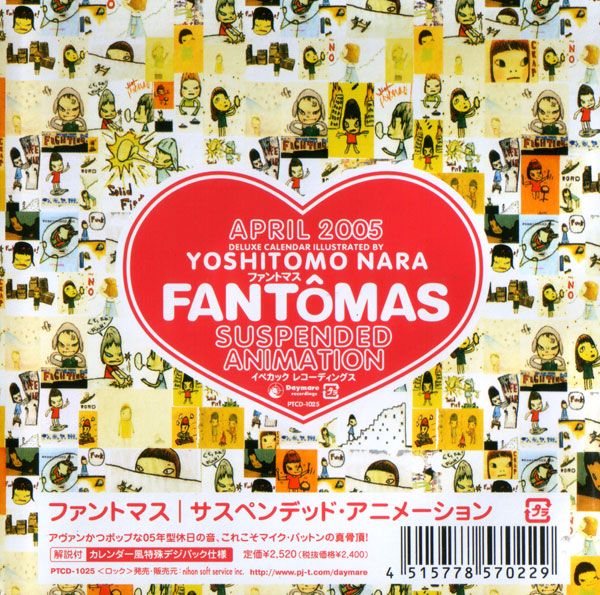
His last album ‘proper’ (though this does technically count) was 2002’s Out From Out Where, an album which took his trademark dark instrumental HipHop into realms of complexity putting him more on a par with a band like Fantômas than DJ Shadow.

Since then he’s released a collection of remixes and this, a soundtrack to the then-most recent in the Splinter Cell gaming franchise. As a result, some of the tracks are more mood-based than actual song, but as a whole it works.

As the emphasis has to be on what the gamer is doing at any one time, Tobin has reeled back the complexity for this album, focusing more on the atmospherics and solid rhythms. So ‘Kokubo Sosho Battle’ actually sounds like a tense boss fight. But I don’t know, as I haven’t played that game to find out.

It would be interesting to see how well the music lives in an interactive environment, where what plays is dependent on your actions, but as a linear listening experience, this is excellent percussive electronica which stands tall on its own merit.

Thirty-seven


Little BrotherThe Minstrel Show (Atlantic/WEA)

While I have a pretty big rap collection, the depth of my actual appreciation extends, sadly, to ‘I know what I likes on my stereo’. I suppose there’s nothing inherently wrong with that, but it does mean that I am ignorant of the various subgenres of the scene.

For example, I wouldn’t know whether or not this is an example of the much-ballyhooed Conscious Rap. Again, it matters little, as this album is a good one.

Aesthetically, the lush mix and tendency for R’n’B hooks remind me somewhat of Connected (2004), by Foreign Exchange, though the romance of that album is replaced in large part by a keen sense of satire. I suppose the title was a dead giveaway (‘it’s the biggest coloured show on Earth!’, as they are wont to proclaim).

Humour runs through the course of the album, ostensibly a variety show, hosted by UBN, or ‘the U Black Niggaz network’. With the one real joke to the record, though, the constant references to UBN get a tad old as the album progresses. It’s no big deal, and skits in which a dad is concerned that the Minstrel Show is a bad influence on his son are inoffensive enough.

That’s not to say Little Brother totally eschews the love song. ‘Slow it Down’ is a fine example but, given the humour running through the album’s concept like it was Blackpool rock, it is hard to assume such songs are devoid of a tongue dwelling constantly in their respective cheeks.

Musically, the listener is mostly treated to the soft-edged, soul ballad kind of sound, as exemplified on ‘Lovin’ It’ (it never gets too soft, though, what with lines about ‘waking up, holding my dick’, as Joe Scudda so poignantly puts it).

While the sound and beats are nothing new, they are carried off with flair. There are seventeen tracks, but the album is done and dusted in well under an hour, and does not outstay its welcome. I’m sure there is a Michael Richards joke to be made here, but I’m too much of a Seinfeld fan to do that.