Beirut – March of the Zapotec

Pompeii Recordings (2009)

As per usual, I gots lots on the go, blogwise, but nothing’s getting through the door. Three Stooges syndrome, innit. So here’s a thing I did for FACT. It’a bloke who calls himself Beirut, and here’s the full story. Note absence of synth-pop dissage in the FACT edit… And I’ll not suggest they have any kind of agenda there.

***

Zach Condon returns with his third album, which should please fans of his idiosyncratic take on maudlin indie. The prolific youth (hey, he’s younger than Back to the Future) opened his account with Gulag Orkestar. It was something different in a world of sound-alikes and bores like Clap Your Hands Say Yeah, Danielson and the Decemberists.

One would listen to a song like ‘Postcards from Italy’ and rejoice at the effective pseudo-individualisation on offer. Sure, it wasn’t something actually new, but here was someone making an effort to distance his sound from those around him. And for that he was rightly applauded. The album was vaguely reminiscent of Neutral Milk Hotel’s ‘the end of indie’ classic In the Aeroplane Over the Sea, though it was hard to put a finger on why.

Lacking the overt pop melodies of Jeff Mangum’s band of musical wonders, or the naïve optimism in the face of insurmountable adversity of its themes, the comparison must largely have been due to a combination of the relatively novel instruments used and the fact that, hey, here was someone doing things differently to everyone else.

We fast-forward three years, and Condon is no longer a teenager. Away from the comfort of 4AD, he is now releasing music on his own Pompeii imprint. And, technically, this isn’t a new album at all.

March of the Zapotec refers only to the first half of this release. After around 18 minutes, the artist changes. We are presented with Holland, by Realpeople: Zach doing electronics in his bedroom. Give us a snare rush!

The meat, for most listeners, will be March of the Zapotec. The fleeting, introductory, ‘El Zocalo’ eases us into the record, before festivities proper begin with ‘La Llorona’. I say ‘festivities’ but this funereal piece, lovely though it is, is far from festive.

Condon headed south of the border, to the Mexican village of Teotitlan del Valle, where he hooked up with The Jimenez Band. The EP’s ‘Zapotec’ is the dialect the Oaxacan band speaks.

It is a tribute to Condon’s musical fingerprint that he has managed to make this Mexican band sound eerily adherent to the ‘loneliest shepherd in the Balkans’ aesthetic he has established for himself.

Beirut rewards close listening, though, as the depth of the arrangement quickly becomes apparent. The Jimenez Band provides more than ample backing for what is the real draw of a Beirut album: Condon’s affectingly honest vocal timbre.

There are, of course, reminders that this is a Mexican band, such as the occasional machine gun trumpet lines, and the insistent strumming of what is presumably a vihuela. While the instruments vary from Beirut releases past, the mood remains. For all the up-tempo diversions and rhythmically powerful percussion (one for the headphones, this), the pervading mood is one of gloom.

It is a different kind of melancholy to the one we’re used to. Allow yourself to picture the band and man, playing together in Southern Mexico, and the music filters through it. It’s almost an extended eulogy from a relatively untouched area of the country for the countless drug war victims currently being slain at the American border.

Admittedly, the lyrics fail to evince this, so I’m content with it being mere flight of fancy. It is heartening that the music is so illustrative that it provides such a backdrop to one’s own thoughts. It’s a shame, then, that we are brought back down to terra firma with a bump for the second half of the CD.

Holland is a bit of a disco diversion. It’s tacked on because it probably wouldn’t sell as a fully-fledged EP on its own. ‘My Wife, Lost in the World’ has its moments, largely in the vocal harmonies Condon employs effectively. Otherwise, we’re left with the quasi-Boards Of Canada of ‘Venice’. It ends up sounding like a lazy Beirut remix anyway, as the brass makes a return to the mix.

By the time we get to ‘No Dice’, you want to applaud Condon for the effort, but you can’t really. If you’ve heard múm, Plaid or Dykehouse, then keep listening to them. I’m a strong believer that the synth-pop renaissance should largely have been confined to turn-of-decade electroclash, and this is strong evidence in favour of that position.

Holland isn’t bad. It’s just not very good. I’m not really sure who it’s geared toward. One would imagine it’s for people who lap up anything Condon does, because those specifically attracted to the melancholy organic flow of Beirut will find little solace here.

And its inclusion on this CD, while a fair way to pass the time, besmirches the good work done on March of the Zapotec. It pains even me to say this, but here we have an album of two halves. The album has two names, two identities. It might have been easier to tea-leaf a Manics title and just call it From Despair to Where?

Earth packaging fetish: widescreen edition!


So I finally, finally got hold of the Earth album from last year, after everyone was banging on about it. It sold out at source very quickly, which led to yours truly searching, in a panic, for other copies. None in shops or the usual internet places. Someone recommended Rough Trade, and they had it in stock. Four quid more than at distro, but that’s still better than the average eBay price of £30.

Then nothing happened. Turns out Rough Trade didn’t actually have it in stock, but their idiotic website failed to register that little detail. So then I found a French shop that had it. Or were they Dutch? Anyway, they were very pleasant, but the postage was nuts. See, this ‘bible’ edition is a record of some heft.Figured I’d just leave it. A friend of mine got the CD over Christmas, so why not just rip it to lossless files?

But Southern distro opened back up after the festive season, and I was browsing their myriad wares. ‘Why not see what Earth they have?’, I asked myself. So I did. And what should I find there, bizarrely back in stock? If you saw the top of the page, you won’t be surprised to learn the answer is ‘the new Earth album’. Well how about that. I emailed those fine people to enquire about how this miraculously reappeared in stock, but they’ve not got back to me. Fair enough.

As usual with these records, I haven’t had a chance to listen to the whole thing yet (story of my life), but what I heard was just lovely. And better than lossless files. Not quite as monumental as HEX, but little is. Can’t wait to see them. Oh, and some of the riffs on here are very early 1990s Seattle. Like, amazingly so, just cleaned up a lot as suggested by the current Earth aesthetic. But really, I think it’s track three? Proper fucking grunge.

Love it!

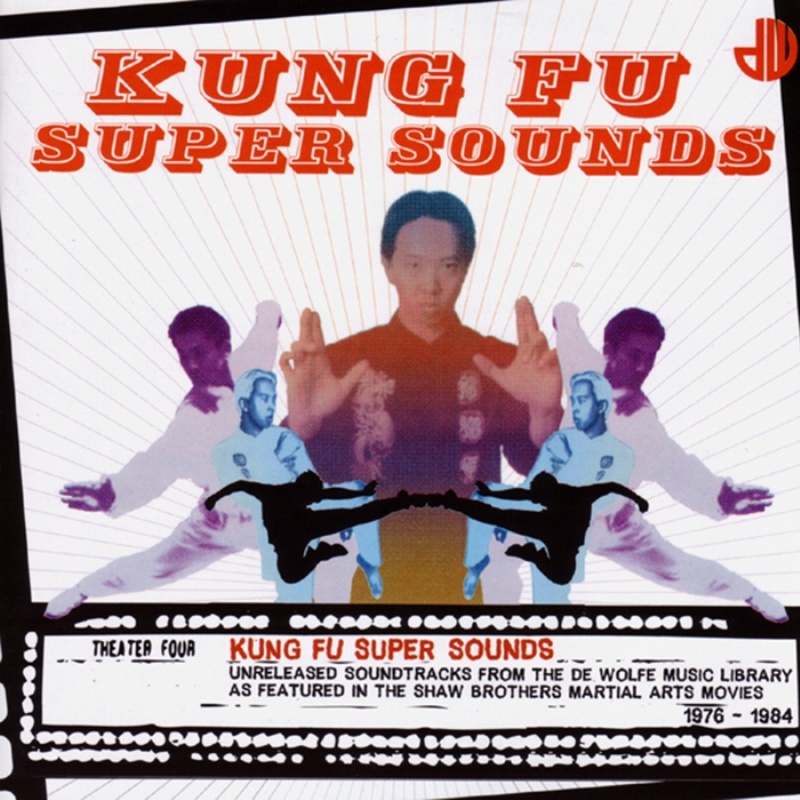
Shaw Bros. (Various Artists) – Kung Fu Super Sounds

De Wolfe Recordings (2008)

Personal preference for 1960s Mancini aside, it’s hard to go wrong with 70s soundtracks. Ennio Morricone, while always great, put out some brilliant stuff in that decade. And then you have Nino Rota’s Godfather soundtracks, Shire’s Taking of Pelham One Two Three. Oh, and Lalo Schifrin, of course. His Dirty Harry series stood out, as did Enter the Dragon.

Kung fu film soundtracks had to fulfil certain criteria to work, back in the 1970s. I love the modern films as much as the next man, from the grand Romeo and Juliet statement of Hero to the surreal superhero slapstick of Stephen Chow’s films. I even like the odd Yo-Yo Ma/Tan Dun tandem.

But the old-school kung fu films had to hit various spots: they had to be funky in the right places, ominous when the occasion demanded, and energising when there was a scrap going on. Which was a lot of the time. Shaw Bros. were synonymous with a certain kind of kung fu. The outlandish Flying Guillotine is a personal favourite, and the impact of the 36th Chamber of Shaolin in the music world goes without saying.

So fans of soundtracks, kung fu films, and great music should be intrigued by this collection of music from Shaw Bros. films between the years of 1976 and 1984.

Opening with the sonic Shaw Bros. signature that should be familiar to anyone who’s seen Kill Bill, Kung Fu Super Sounds is a sprawling selection of aural snapshots from the era. Tunes like ‘Waiting for the Man’ (from Shaolin Mantis, 1978), are truly awesome. As it’s the longest song in the collection, it has time to build mood; that sense of looming threat. Brass flares a warning while the whole orchestra crashes in to punctuate. It even has something of an instrumental chorus.

But no other song has such time in which to luxuriate. ‘Fast Moving Stranger (from Dirty Ho, which must be one of the most unintentionally wonderful film titles ever) is a pre-Fantômas blast of walking basslines rushed into an agitated run, chased down dark alleys by clipped guitar slashes and organ lurk.

‘Old Dark House’, from Heaven and Hell, delights with its howling ambient darkness, and makes its point in a tenth of the time it would take many modern doom bands to do the same. ‘Horror House’, from three years earlier, is equally malevolent. ‘Spin Out’, also from Heaven and Hell, is another memorable piece. It’s almost like a precursor to the more effective material on Ghost’s occasionally masterful 2004 Hypnotic Underworld.

Interestingly, rather than one person composing each soundtrack, the films represented have been composed by numerous individuals. I suppose it’s a farming-out process one might expect from such a large company.

As with any compilation as chronologically wide as this, there are songs that drop the ball. These pieces can loosely be categorised as ‘the 1980s’. While there are some bright moments from the decade, such as the epic ‘Manoeuvres’, there was an ill-advised period of electronic experimentation.

This in itself would not be such a bad thing, but the result here is a small collection of bleeps and squawks that sound dated next to what Perrey and Kingsley were doing fifteen years earlier. While the ‘Electro’ pieces are an interesting example of the variety that was on show during this era, the compilation could really have done without ‘Duck and Blacker’. That said, Ronald Marquisee’s ‘Electro Link 18’ is a lot of fun for those who dug on Plone or Broadcast.

Overall, Kung Fu Super Sounds offers soundtrack action of a sufficiently high quality to make it a worthy purchase. While not all the songs on here are gold, anyone who got Morricone’s Crime and Dissonance should make space on their shelf for another CD.

Animal Collective – Merriweather Post Pavilion

Or: ageing and the unavoidable art of comparison
2009, Domino Recording Co.

The subtitle’s a tad less catchy, though. I’ve been wondering, for the last few days, how to go about this. On Wednesday, I started thinking about how I should probably have made a small post about this album each day, to document the evolution of my relationship with MPP. That’s hindsight for you.

So I shall begin at the beginning. Back when I was an illicit downloader, one of the many albums I snagged in my virtual tuna net was Sung Tongs, the 2004 Animal Collective album. I remember very little about it, other than I hated it, and hated the name (unaware of any etymological resonance that may have inspired its choice).

I bore such a grudge that, not only did I not listen to an AC album for the next four years, or any related artists (Excepter… excepted), but I even put off hearing Bloody Panda, who had nothing to do with them. OK, so Bloody Panda turned out to be a fantastic doom band: lessons learned and all that.

When I saw FACT mention that AC had suddenly become awesome, inlet my guard down. Well, it was a combination of that and their likeable interview in the end-of-year Wire. Already ordering the Tricky album from Domino, I decided to MPP on the order and get the free postage.

As this was a pre-order, weeks past and I wasn’t that bothered. The album arrived on 13 January and, my turntable not connected, I still wasn’t bothered. There was something weird going on at Domino’s digital download site, so my WAV files didn’t come when I wanted them. whatever.

I eventually downloaded the WAVs, one by one, on the evening of 14 January, and figured I may as well stick them on my portable music player.

I think I ended up listening to it on 20 January. I’m not sure what I did in the meantime. There was the Campbell and Lanegan record, but otherwise I’m not sure. I think I may even have first listened to it using the abysmal default white iPhone ear buds. I do not recommend this behaviour. Despite this delay, and the aural handicap, brilliance shone through.


If you’re the kind of person who knows my wordy style and scans my posts, this is the bit where you should probably start reading. The preamble wasn’t too bad though.

The reason why I would like to have written daily posts is because of the way I got into this album. It was like being sixteen again. Example: when I got into Kerbdog, I heard one song and loved it. I couldn’t wait for the release date of the album. I taped over the first four minutes of a compilation tape I had made myself, just so I could hear that song on the go.

Then I got the album and I loved all of it. And that wasn’t the only one that caused such a reaction in me around then. Albums by Metallica, Faith No More, Mark Lanegan, Kyuss, Karma To Burn, Kilgore and Devin Townsend were all massive hits with me, often usurping each other in my all-time top 10. I would obsess over albums, listening to them every day for weeks. I’d be slightly upset when that eventual non-listen day arrived.

You get older, you hear more music. Scenes come and go. At some point you decide music, as a whole, isn’t quite as good as it was at some point in your youth and that’s it. The top 10 is virtually impregnable.

A friend of mine once mentioned a study he’d read about, that said we are more susceptible to the effects of music between the ages of 17 and 24. The more I thought about that, the more it made sense. I was born in 1980. My favourite albums of the 1990s are generally in the latter half of the decade. Most of my faves from this decade, I heard between 2000 and 2003.

This concerned me. As a teen I would look at men in their thirties and forties, the ones who didn’t have any true favourite albums after 1976. I’d pity them. What kind of existence is that, I reasoned, when you don’t expect to hear any new music that blows you away. That must be pretty depressing.

You can see where I’m going with this, right? Well I could see where I was going when, with each passing year, Through Silver in Blood remained my favourite album. I never expect it to be beaten, but I hope it might be. Other than that, the last album to trouble my top 10 came out in 2003. There was a thrilling album in 2006, but the passage of time has been unsympathetic to its charms. I’ll have to start listening to it more, actually.

So when ‘in the Flowers’ opened the album, my ears pricked up, interested. It was good, but there was something else there: depth. There was a sense of in-the-mix euphoria running through it, but not to the point that my mind began racing. It was more like the sound I’d imagine the Arcade Fire to make, if they were actually as good as the hype suggested.

Then ‘My Girls’ came on. I had actually forgotten that FACT had singled this one out as a highlight, and that the Guardian described it as ‘impossibly blissful’. All I knew was the moment, and it was good. I was nearing my bus stop on the morning slog through the traffic, but I couldn’t help grinning, broadly, at how great this song was.

The funny thing was I only really noticed it from the halfway point, when the ‘chorus’ comes in. I love when vocals are well arranged; it’s my musical soft spot. This is one of the reasons I love Lift To Experience so much: Josh Pearson knows how to lay out a tune for more than one line of vocals it’s one of the reasons I love the alternative rock of Kerbdog and Alice In Chains so much. It’s the reason that my heart races every time I hear ‘Otherside’, by an otherwise mediocre Red Hot Chili Peppers.

And this had it all. Vocals complementing other vocals in a round. Tight, layered harmonies that rose at the right points. ‘My Girls’ adheres to that basic rule of script-writing: ‘cut out everything but the good bits’. It is just ‘good bits’, and that is the best way I can find of describing the song.

I had to get off the bus, but I was like a kid again, telling people about the great song I had just heard. I walked home that evening, and listened to the majority of the album. It was a revelation. Whether the sleep-in of ‘Daily Routine’, the ‘techno Beach Boys’* of ‘Also Frightened’, or the tribal cute-Underworld drug-rush of ‘Lion in a Coma’, I was bowled over.

Yesterday I ‘only’ listened to Merriweather Post Pavilion once. Have played ‘My Girls’ to lapsed eighties rockers now into chilled out soul, to mature punk rockers, and to Orb fans who have taken loads of drugs: they all think it’s great. I decided it had to be released as a single, just so I could have my most certain single of the year since ‘Crazy’ in 2006 (I had decided on that one in December 2005). It’s coming out, but probably unrelated to my insistence.

I also decided that they have to play near me, and perform ‘My Girls’, so I can go absolutely loopy; I got the tickets for a within-walking-distance gig the other day.

I’m now past that initial shock of finding the album to be so good, I was telling Lea the other day. what’s really shocking is the fact that I am still bowled over by how good it is. Will it still be my love in December? In 2012? Who knows. I normally tend to go a bit off albums released early in the year, only to return to their embrace at a later date (the last Jaga and Shining albums, for example).

But who cares. Tonight, I don’t imagine anything bettering MPP this year. I told that to a friend, who described my statement as ‘optimistic’. I disagree; I’d be optimistic to think there could be another album this good in 2009. maybe Converge, maybe Ahab, maybe Coalesce, Propagandhi or Mastodon. Maybe not.

In the words of Jaga, all I know is tonight.

P.S. On re-reading this post, I am aware I haven’t actually compared the album to anything. That will come in time.

* Not a serious description but, when a friend at work insisted I describe it to him before sticking the headphones on his lugs, I ended up saying ‘like Beach Boys… but techno’. Of course it’s not, but I now have a fondness for that phrase.