The Rise of Nemo
or: Why I Like My Chemical Romance
That’s right, I like My Chemical Romance. I am not a teenager, though I sometimes like to pretend I am. I was going to say I don’t like emo, but I do; here’s why. See, ’emo’ is an abbreviation of a term that was itself an abbreviation: ’emo-core’. It was short for ’emotional hardcore’ (‘hardcore’ being the musical movement from about 1980 onwards that took the punk rock template and filled it even more generously with angst, as opposed to anything more ‘gutter’ that you were considering). I never really understood this term, as I thought all hardcore was supposed to be emotional. That’s why it was hardcore, for Rollins’s sake.

Anyway, the term was taken to refer to hardcore that had more of a sensitive side (an oxymoron?): first Rites Of Spring/Fugazi (arguably), and then more prominently the next gen of Quicksand/Sense Field/Far/Farside/everyone on Jade Tree etc.

What is funny is that, while ’emo’ as an entity not only still exists, but is performing commercially way beyond what we might have thought it could a decade ago, it’s not really emo at all.

Don’t get me wrong; I am not a nostalgia fetishist who decries any change as wrong. Quite the opposite: The Bronx are as punk rock as NOFX are as punk rock as The Ramones. But there is something very integral to neo-emo (or, as I like to call it, ‘nemo’) that is just plain at odds with the emo of the past.

Older emo was, ironically, more stoical; more blue-collar. The players were often short-haired, unglamorous men who were just a tad more sensitive than, say, Agnostic Front. Of course, the scene is now about how glossy and glammy a band can be, while performing as earnestly as possible. Modern emo, with the emotional content ramped up to melodramatic, actually epic, levels is more reminiscent of eighties Hollywood rock (often pejoratively referred to as ‘hair metal’. But that is a stupid term as most metal bands have hair. Especially in the eighties: don’t make me bring out the massive hair pics of Pantera, Slayer or Megadeth). Both nemo and Hollywood rock are maligned, and I would suggest unfairly so.

I will say this about nemo – there is no equivalent of the incredibly brilliant eighties Guns n’ Roses. I suppose this is when I arrive at My Chemical Romance (MCR). It took me a long time to come round to this band, as I had written off mainstream hard rock/metal a long time ago as irrelevant. And let’s face it: most of it was and is. Pantera were the greatest major label metal band of the nineties. Damageplan consisted of Pantera’s guitarist and drummer, and they were woefully mediocre. Before this fact, I would have thought that the Abbott brothers could play anything and have me hurling myself at the walls in excitement.

Anyway, the day came about two years ago when someone on a message board recommended a couple of MCR songs that were not singles. Ever open minded, I looked into this and found ‘I Never Told You What I Do for a Living’. It was brilliant, and anyone into four minute rock songs should hear it. Because of this song, my resistance eroded, and I decided I liked their singles. A fan of the band?

Not quite yet. Late 2006 saw the release of their most recent album, The Black Parade. The first single from that, ‘Welcome to the Black Parade’, was a bit poor, to be honest. As I intimated in my soon-to-be-officially-unveiled Singles Premiership, it started well, ended well and kinda vanished in the middle. The bloke from the Guardian Guide had it pretty bang on when he said the intro made it sound like the greatest song in the world was about to kick in, and it ended up sounding like a McFly b-side. I wouldn’t say exactly that, as the thin guitars and snotty vocal style reminded me more of Avril Lavigne, but either isn’t amazing.

It was almost an epic by numbers: the intro chronicled grand declarations made on deathbeds and ‘seeing marching bands’. It really set the stage for something that sounded truly immense. Instead, we got the aforementioned anodyne pop punk schlock and a bowlful of disappointment. If they wanted to make this movement sound massive and still keep it chart-friendly, they should quite honestly have ripped directly off ‘Long Live the Party’ by Andrew W.K. That song was brilliant; a shining light on an otherwise disappointing record, The Wolf.

Back to ‘Welcome to the Black Parade’: while the majority of the song was an under-blown disappointment, the conclusion raised the quality level to the promise of the introduction. Still very hammy (as it bloody well should be), the closing sequence was an explosion of ramped-up jubilance. It put in my mind images of the youthful dispossessed (the titular ‘black parade’, I assume) all around the world, rising to their feet like myriad excited meerkats in the kind of union that can only be created by MCR. Or Wyld Stallyns, perhaps. It’d be like some glossy live action equivalent of the Thundercats deal where the whole team sees the Eye of Thundera in the sky and rushes into action. Sadly, what little of the promo video I have seen seemed to be nowhere near as cool as my idea.

Thankfully, the next single was ‘Famous Last Words’ and is brilliant. More of what the world was used to from the old album, but well performed and back to the angst that brought them to the dance. That’s written up in the Premiership. New single ‘I Don’t Love You’ is a power ballad of the likes not seen since the heady days of Bon Jovi (with the long hair) and Heart. And, to be quite honest, I am glad. It’s miles preferable to the anodyne cod-cool of Maximo Park, Calvin Harris or Bloc Party.


The Twang: What’s the Deal?

Seriously, I ask all… two of you that read this. That song of theirs isn’t bad at all. Not great, but not bad. But why is everybody going so bananas about them?

Some fucking cretin writing in The Guide this week wibbled on about how ‘this sounds like it could have been released fifteen years ago because it’s already a classic!’, but really it sounds like it could have been released fifteen years ago because it’s nostalgic indie at its most brazen. The kind of thing particularly cloth-eared football hooligans might like; all echoey guitars and terrace chant choruses. It’s like a bad U2 covering The Farm songs.

So I ended up suffering through the Zane Lowe show last evening. Well, I had to listen to something in the bath. And his pants were exploding about them! Granted, every band in the world is something we all need in our lives and the best thing ever according to him, but come on. At least pretend you have standards. No, instead of their single being perfectly listenable cod-indie, it was the song of the year.

The song of the year. Forgetting, for a moment, that we are still in the very first quarter of this year, there have been loads of better singles this early in the annum. Just look at my Singles Premiership for evidence of that. ‘Wide Awake’ rocks nowhere near as much as ‘Saturday Superhouse’. Nowhere. They played a couple of other songs. One sounded like a Midlands The Hold Steady song. Because that’s what it was. They are pretty tight musicians though, I’ll give them that. And when he’s not fellating The Edge, their guitarist is pretty handy.

That’s the thing though. I was watching a Bill Bailey video years ago (not of my own doing). For those blissfully unaware of this gimmick comic, he bases jokes around his aptitude at playing musical instruments, like a particularly annoying high school music teacher who’s trying to appear ‘hip’ in front of the kids. And who uses words like ‘hip’ in the first place. Anyway, he had a joke about how easy it was to write a U2 song. So he played some arpeggios with tons of delay, and everybody laughed. Now, The Twang seem not to have realised this was a comedy routine, and taken it as career guidance. Sad. What’s sadder is that it is just about to make them rather wealthy.

Anyway, they are officially the best thing ever (or at least since the Arctic Monkeys), and shame on any of us who does not like them. Such as me. And they really do sound like a set of complete bozos when interviewed. I am loathe to suffer a decade of their drawling inanity, Liam Gallagher style. LOATHE.

Sorry, had to get that off my chest. Mulholland Dr. review on its way.

Twenty-six


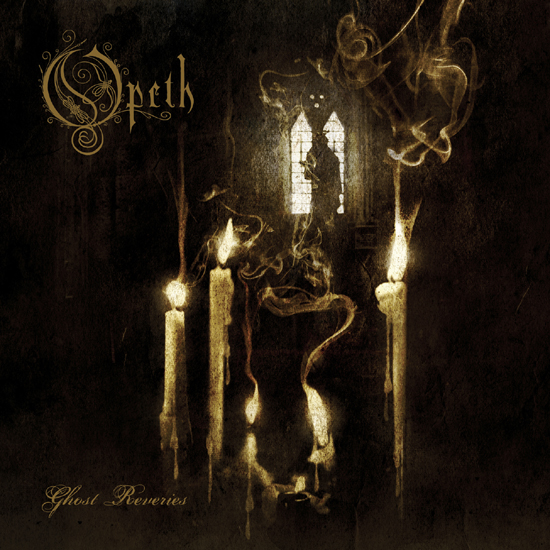
OpethGhost Reveries (Roadrunner)

I don’t really know where to start with this album. So perhaps I should start at the beginning, as they say. As you may or may not be aware (or care), I originally formulated the skeleton of my 2005 list in the halcyon days of, well, 2005. There is a message board to which I semi-regularly post, they have end of year festivities, so I usually tend to round my list out to a fifty by listening once or twice to albums in an mp3 format.

This is terrible form, both as an audiophile (well, as far as finances will allow) and a music fan. To be quite honest, I feel that evaluating a work of music solely through mp3 is almost akin to appreciating a Renaissance painting by asking a toddling-age relative to finger paint his impression of Bacchus and Ariadne and judging Titian on that. But sometimes needs must et cetera.

This is a roundabout way of saying that I listened to this album on mp3. Probably. If not, consider the last two paragraphs catharsis. I know that I listened to it once on the Death Deck, and made placement of it on this here list from that, so I am still bad. What is really weird is that I was very impressed with it, but also found no urge to listen to it again. Which is why this instalment of 2005 was so long in coming.

I think one of the reasons why the thought of listening to it was so unappealing was because every one of the songs hereon seemed to be an epic (in reality, ‘only’ half of the songs break ten minutes). I usually tend to like things like that (I mean come on, removing the brief sample-scapes, the average track length on my favourite album ever is ten minutes), but this can sometimes be slightly intimidating when it comes to first getting into the album. The other reason is that I’m not the biggest fan of Euro-metal.

I really like that strain of Gothenburg melodic death metal (i.e. the successor of Liverpool’s Carcass, at least in latter days, and the progenitor of pretty much every major American metal band of today). I also have some fondness for Norwegian black metal (as well as the bizarrely avant-garde bands that sprung from the country: Arcturus, In The Woods et al). I just can’t get into European metally metal (touches of the eighties, hints of goth). Like Moonspell. I never liked them.

Still, this Opeth album was to 2005 what Mastodon’s Blood Mountain was last year, i.e. the straight-up metal album that was supposed to be so good that it transcended our little ghetto and became that album non-metal fans could listen to. I never really understood that notion, as a metal album is a metal album, and you might as well listen to a bunch of the albums, rather than a ‘look at me, I can listen to metal’ coffee table gesture. Anyway, I liked it a lot, thought it had a lot of potential and decided I might as well give it another listen, seeing as it was pretty high on my own list.

One observation I had from that initial listen, possibly tying in with the sense of the epic, was that it seemed to be a European (in metal terms, read: ‘less cool’) take on Tool’s excellent Lateralus (2001). In hindsight, that comparison doesn’t really play out, but opening song ‘Ghost of Perdition’ reminded me of the L.A. quartets ‘The Grudge’ in its length (and resulting level of statement in having such a song open an album), dynamic shifts that are less swings than drops off precipices, and the clarity in production. Still, both are great and powerful songs, so there’s nothing wrong with the similarity.

The only real issue with that opening song is a dislike of the album as a whole: the vocals here are too binary, almost to the extent of sounding like an ill-fitting collaboration. The singing is either cleanly-sung poppy melodies or gruff death metal vocalising. The latter is poor, at best. I have nothing against death metal vocals at all (and I would like to take this opportunity to mention how I loathe that lazy term ‘cookie monster vocals’), in fact I tend to like them.

Slowly We Rot, by Obituary, has excellent DM vocals, as does most early period Morbid Angel. In fact, there is a DM passage on Mr. Bungle’s ‘Merry Go Bye Bye’ that is phenomenal, and by that I mean pretty much the best death metal I have heard. Plus, the vocals from Brutal Truth, Coalesce and Soilent Green were all very DM-influenced. This, though, is weak. There is no sense of brutality to the vocals, none of that real guttural nastiness. It’s clean death metal singing, and that really does not work.

It also sits very at odds with the rest of the sounds on the album, which is overall very melodic. Track two, ‘The Baying of The Hounds’, really evinces this melodic sophistication as it breaks down quite beautifully into a very mellow passage. When the ‘rocking’ returns, it does so while maintaining the beauty; a deluge of shimmering guitar notes, picked as though by angels. This is the Opeth that really justifies the plaudits that have been bestowed. The song ends rather suddenly, but this is otherwise another awesome epic, in both senses of that word.

For every step forward, though, there is an equal and opposite move from the band. There is also a sense of diminishing returns as the album progresses. ‘Beneath The Mire’ is an eight minute song that seems neither here nor there, partly due once more to the irrelevant yin-yang of the singing, and partly due to what emerges as the real sticking point of the album: it’s just too polite.

I mentioned earlier how well-produced this record is, and that is very much the case; the problem is it’s too well-produced, in a way. Maybe that’s why the aggressive vocals sound so neutered, and it is certainly the reason why, even on the complex, dynamic ‘The Grand Conjuration’, the fast and jagged riffing sections fail to energise me. As someone who loves the sound of testosterone (and is completely unapologetic about it; maybe my perspective will change when I hit thirty, and my own levels drop), this kind of flaw is inexcusable.

The album is really summed up by the closing ‘Isolation Years’. A perfectly fine romantic rock song, though very clearly below the kind of thing Peter Steele’s Type O Negative were doing on their Bloody Kisses and October Rust opuses, it definitely benefits from the omission of what seems elsewhere to be an obligation to rock.

With the success of the melodic rock frames, as well as the undeniable superiority of their clean vocals over the ‘gruff’ ones, this seems to be less a classic Opeth album than it is a self portrait of a band at a crossroads. Not knowing which way to turn, they split their forces, resulting in an album that sounds unconvinced in itself. Perhaps it is time to put to rest the ghost of nineties death metal that haunts Europe still. Amorphis seem better at that kind of duality anyway. Ghost Reveries is an album for which sheer sophistication, professional sound and scope of vision end up being its albatross. Opeth are excellent artisans, but what this album really needs is artistry.

MMA: On Legends

Everybody likes a good legend; one of those near-immortals we can all look up to. Well, apart from those jerks who like banging on about ‘sacred cows’, but those people suck most of the time anyway. Yes, legends. A personal favourite legend is sprinter Michael Johnson. He was knocking about during my athletics-viewing life, and generally mullered all opposition while looking like he wasn’t breaking a sweat; comically straight back and all. He was like something out of the cartoons: he’d steam off like a pneumatic Chuckle Brother, leaving world class runners choking on the hypothetical dust there would be if professional running tracks were dusty.

He is a legend, one of those performers who stand almost larger than life, like Pele, Michael Jordan and Bjorn Borg. A legend is someone who not only excelled in his field, but to whom we tend to feel that extra adoration; they are less mortal men than they are tangible concepts of what the synergy of human body and mind can achieve.

Mixed Martial Arts is a young enough sport that discussion about ‘legends’ seems rather premature. That said, the last three or four years have suggested that a certain crafty veteran deserves no less nomenclature when discussing him. I am obviously referring here to one Randy Couture, an indubitable class act.

Much has been made of his status back in the day as simple placeholder opponent for Chuck Liddell, during the infamous contract negotiations of ‘fighters’ fighter’ Tito Ortiz. How the veteran who allegedly couldn’t cut it against the new breed of massive, skilled heavyweights took to school a man supposed to knock him out on the way to his inevitable title shot. Couture was doubted, and he responded by beating a surprised Liddell on the feet, before supplying massive takedowns and stopping the Mohawked one with ground and pound. When he then dominated Ortiz for twenty-five minutes, his legacy was pretty much sewn up on the spot.

That Couture also happened to be a quality commentator, incredibly well-mannered speaker and all round clean living man about town (there was that period when he only ate green things: spinach, kelp, plastic watering cans…) was a pile of awesome icing on the already excellent fighting cake. If, indeed, cakes could fight. His jaunt as coach on the inaugural season of The Ultimate Fighter (TUF) sealed the deal; his ensuing knockout loss to Liddell, while halting any talk of a Couture-Wanderlei Silva super-fight (how times change) did nothing to tarnish his status as beloved elder statesman. If anything, such a display of Octagon mortality endeared him more.

Then, as the unwashed MMA masses like to say, Father Time did a number on ‘The Natural’. He looked slightly laboured in his win over Mike Van Arsdale (but let us never forget the glory of that opening round – such a display of wrestling quality), and another knockout loss to Liddell sent him to retirement.

Or so we thought!

Yes, it turned out that after keeping his hand in competition in a grappling contest against Ronaldo ‘Jacare’ Souza, the lure of the Octagon, and its associated PPV bonuses, were too much for Couture to resist. Rather than make dollars against the Switchyard Sullivans and Boxcar Fritzes of this world, Couture opted to face heavyweight champion Tim Sylvia, a man much bigger and punchier than the Barnetts and Rodriguezes who sent him packing in the first place.

The ostensible absence of logic in such a decision has been covered, at length, everywhere, as has the result (for those in the dark: Couture, by constant humiliation). What heartened me about the result of the UFC 68 main event was the fact that, though we all doubted him, Couture prevailed. While I had some concern about his future health going into this fight, I rationalised his decision with the knowledge that it’s not like he had never been knocked out before. In his career, Couture has been stopped hundreds of times. Thousands.*

No, my entirely selfish concern was about his legacy: it stood to reason that a man twice stopped by a light-heavyweight puncher would get stopped by a puncher a half-foot taller and sixty pounds heavier. Of course, someone like Muhammad Ali is blatantly a legend, in pretty much every sense of the term. Still, we’d all rather he’d not had that last comeback in 1980. UFC 68 seemed to signal the beginning of an unnecessary, potentially toe-curling career postscript.

Imagine my infinite shades of relief then at the victory, and such a dominant, well-planned and well-executed victory at that. Not only was the legacy intact, but we are seemingly at the beginning of a new chapter of fighting fecundity from the man. While Couture seemed to tire by the mid-point of the last fight, he was assertive enough that Sylvia was utterly unable to take advantage of that.

Indeed, mid round belching and wondering aloud which round was next were the greatest of the now ex-champion’s accomplishments on that night. Well, apart from making the crowd hate him even more by mentioning his injury (legitimate though I am sure it is) in the fight’s post-mortem. I have also to admit that, as much esteem as I hold for Sylvia, Couture as champion certainly makes the heavyweight scene that bit fresher.

In the middle distance is a showdown between Couture and Mirko Filipovic, and again the legacy is on the line. Not quite to the same extent, it has to be said, because a loss to ‘Cro Cop’ is a very real and likely proposition for most fighters. However, this is another fight in which Couture can shock the world.** Who knows what the man might achieve against excellent, and reasonably similarly-sized, opponents like Brandon ‘Contract Negotiation Kid 2007’ Vera and Andrei Arlovski. Conversely, how much career redemption a win for Arlovski over ‘The Natural’ would be.

Having signed a two-year, four-fight contract, perhaps this era of Couture will turn out to be a mid-life crisis… for his opponents. But seriously, one thing is for sure: it is great to have our legend back, with all the stress, hopes and fears that accompany such status. These are interesting times indeed in the world of MMA.

* * *

*Not really. It’s a Seinfeld reference.
**I wouldn’t bet on it though.