Pride 34 Hyper-Caffeinated Play-by-Play

OK, I woke up about an hour after this was due to start. First thing I saw was what turned out to be the closing moments of Nakao-Drago. I was concerned that I had missed a lot, but apparently not; I’m told that was the first fight. Anyway, Nakao won that withwhat looked somewhere between a neck crank one of those weird New Japan side choke things. I wouldn’t know. Anyway, Drago disappoints me.

Next up was Butterbean vs. Zuluzinho. Mention was made in the video package of a Monsters Grand Prix. Hopefully they just meant this fight, because that is not what I need to contemplate when I’ve just woken up. Anyway, there was a brief bit of brawling, Zulu got a takedown, Butterbean reversed it in a scene reminiscent of two giant tortoises tryig to grapple, and side cotrolled him for a while with the ocasional punch. Bizarrely, Bean won it pretty early with an arm lock I’m not sure of the official name for. Elbow was vertical past the head, arm was bent pretty much double. Sorry.

Galesic – Takimoto has been happening while I’ve been typing. The sacrifices I make. This has seemed pretty cool, actually. Zelg seems to have had the best of the striking, with Takimoto slightly more successful initially on the ground (then some Galesic GnP). As expected, then, but both are back pon de feet. The two were trading, Takimoto obv got dropped. Some ‘soccer kicks’, but Galesic now in guard. Takimoto busted open. Centred on the ground. Takimoto with kinda open guard, controlling arms. Switches to an armbar attempt, some rolling about, Taki in side control, wins with armbar.

Uh-oh: Yvel. Here comes trouble. Opponent is indeed Shoji; they showed footage of him getting knacked by Semmy. Bloody hell, Shoji is only just coming out? That Yvel entrance took too long. Might have to make more coffee at this rate.

Early days, and Shoji in Yvel’s guard. Whoa, I must have blacked out for a while, because we now have an ankle lock battle! Has Yvel been replaced by Valentijn Overeem or something? Yvel gets narked with that and surges into action with some surprisingly effective ground and pound. That’ll be a stoppage in the first then. Yvel helps up a limping Shoji because everybody is nice today. Seriously, you should have heard how pleasant Esch was about Sakakibara. The whole world thanks him, apparently.

Awesome. The camp marching music signifies the impending presence of no less than Don Frye. This song is seriously excellent; it’s like he’s a superhero from the black and white age. OK, James Thompson is second out and he still looks like he’s being electrocuted, thankfully. That was possibly the best staredown I have ever seen. There was jawing, that strange near-headbutting that’s more of a violent head-rub, everything.

They steam out at each other and Thommo falls. The world’s most lethargic ground and pound allows him to get back up and we get a brief re-enactment of Frye-Takayama. They get separated, Thommo with a takedown and side sorta-control. The action slows. They get back up and the pace has definitely dropped. They go back down. Frye impressive with the control. Guillotine attempt from Selleck. Thommo gets out and is on top. Jimmy transitions from decent punches to teeing off for all he’s worth. Frye technically remains on his feet, but really takes a breather by leaning on the ropes. Few are bothered by that. Thompson just keeps punching and eventually the fight is stopped. After the initial animus, the two kiss and make up. Sadly not literally. News-that’s-not-news: Thompson does not punch as hard as Le Banner. I have to admit I really liked this one; I was proper cheering away by the closing stretch.

‘I won’t let that happen again’, Frye apologises to the crowd. If only I could believe you, Don! He does give credit to ‘this big bastard’, though. ‘The only happy people on the planet are for[sic] Britain’. Frye over-estimates his import to international self-esteem, and Coleman tells him he’s a star. Thommo starts banging on about how Frye is his MMA hero (that explains a lot), and it’s all very emotional.

Intermission signals more coffee for me. Aiming for a level of hyper-caffeination here. Oh, how I have missed the summer morning sun. Excellent, Takada and Sakakibara promos have happened, and we get a guest appearance from Tiger Mask Sakuraba! This is going to be the great fighter parade I had hoped for, as Tamura rocks up to the ring. What… they’re going to fight? I wish I could understand Japanese. Maybe they’re just solemnly reminiscing. No idea what that was.

Aoki up next, and I imagine this is going to be a quick submission. Prove me wrong, Brian!

Brian jumps into Aoki, gets caught, taken down, Brian punching from Aoki’s guard. Jumping knee attempt taken down, Aoki now on top. Brian reverses positions, but gets caught in an armbar! Quick submission it is (1:33).

Oh shit. Sokoudjou gets 808 State soundtracking his video package, which is just marvellous. The first minute is tentative kickboxing, and Sokoudjou defends the takedown well. Oh you lie! Sokoudjou knocks Arona down with a right uppercut, goes for a bit of GnP and kicking, but ref waves him off. Unbelievable, and in less than two minutes. Sokoudjou with another massive upset.

Footage of Fertitta press conference, and seeing UFC action on a Pride show is surreal. I know, I’m naïve and old fashioned. It’s still weird, in a good way. The Monson entrance is a tad more traditional mixed martial artist than the pre-Silvia fight excellence. Fujita with the Pride theme and, swept up in the moment, I now want him to win. I’m fickle, I know.

After a feeling-out process, a Monson takedown is defended, but he ends up with Fujita’s back, while on the feet. Gets the takedown, but Fooj reverses it. A bit of inaction (I assume so, wasn’t really paying attention. Apologies), and restart on the feet. Four mins gone. Fujita trying for a one-punch finish, but is defended against. Monson with another TD attempt; Fooj on top, north-south. Monson scrambles, gets Fujita’s back. Hammerfists. Fujita defending the rear choke. Monson is tenacious, and apparently sinks it in (dodgy camera angles). Fujita taps and UFC wins. How symbolic.

Seemingly everybody who was ever in Pride is in the ring, and the people Dana likes are cutting promos. I have to admit that I am slightly moved when Sakakibara faces the assembled fighters and says ‘thank you for everything’. At times like this I still wish Pride was on good terms with Inoki. Quite emotional, all things considered, and I was pleased to see people like RandleMAN, Ze Mario Sperry and Bustamante knocking about.

Pride 34 Preview


Well, I’ve already done a ‘best of times, worst of times’ intro, so I guess we now go with the fall of the Roman Empire. A few short years ago the greatest fighting promotion in the world, Pride got poisoned by the lead water pipes of alleged Yakuza involvement and, slowly, what was once the most celebrated, extravagant MMA promotion of them all became inexorably moribund.

Of course, Pride FC is not going to die per se. If anything, it is now subject to its most stable financial backer in its decade of existence, the Fertitta brothers. However, there is a definite feeling that this is the end of an era. Though we are also on the verge of a new, potentially heart-stopping, era in terms of dream matches becoming tangible, the Pride of old is gone.

Pride 33, in Las Vegas, was a stunning show that belied the true trouble the drowning promotion was in: it was a night of great fights, massive upsets and excitement. If only that was the swansong for Dream Stage Entertainment.

As the DSE-produced Pride splutters to its final demise, viewers are given Pride 34. An illustration of how things have changed in the fight world could not be starker. After Antonio Rodrigo Nogueira was seen sitting with Dana White at the ninth Ultimate Fight Night and Mirko Filipovic already fighting in the Octagon, the Pride heavyweight division has encountered a turning of the tables.

The Pride FC website mentions four heavyweight fights for this card, one of which being the epoch-defining Pride/UFC collaboration fight: Kazuyuki Fujita vs. Jeff Monson. This would seem not to be quite on the scale of fantasy matches such as Fedor Emelianenko vs. Tim Sylvia or Andrei Arlovski vs. Nogueira.

Though it lacks the sense of occasion such a fight should bring, this meeting should still be engaging on its own terms. Both are very physically strong fighters with decent wrestling and very heavy hands. Fujita has a definite chance if he can secure an early takedown and carefully pound (if that’s not an oxymoron) to stoppage from the mount. Otherwise, the fight seems to be all Monson.

I see Monson being slightly more accurate on the feet, even though his reach seems to be in the negative region. If ‘The Snowman’ gets a takedown on his terms, then Fujita is not likely to have sufficient submission defence to prevent the American 2005 champion of the Abu Dhabi World Tournament from doing what he wants. While Monson might connect with Fujita’s face in the way Wanderlei Silva did last July at Critical Countdown Absolute (or Fujita somehow controlling Monson for a decision), the theoretical money here is going on Monson by choke.

The heaviest fight on the card lumbers into view as Wagner ‘Zuluzinho’ da Conceicao Martinstakes on Eric ‘Butterbean’ Esch: a grand total of seven hundred and forty pounds in weight, apparently. Not the most thrilling proposition to this fight fan, Esch is likely to knock out the Brazilian giant. While grudging props go to Zuluzinho for certainly not shying away from definite losses in the past (his last two Pride bouts were against Rogerio and Fedor), he is not the most skilled fighter. He is unlikely to ground and submit the American, most known for Tough Man contests and concussing Johnny Knoxville, and I predict a short, painful night for the Brazilian, capped off with unconsciousness. The victim of that last bit might just be me, though.

Slightly more credible is the meeting of Don ‘Magnum P.’ Frye and James ‘The Debt Collector is a Better Nickname than Colossus’ Thompson. This is likely to go longer than the Butterbean fight above, but no less brawly. Frye is a bit of a legend in the sport, and another total gamer: he took on Jérôme Le Banner in a K-1 rules match in summer 2002, even though his destruction was almost certain. That was quite the knockout. Around that time, he took part in the famed head-punch-stravaganza that was his bout with Yoshihiro Takayama. Frye took that one, along with the features off Takayama’s face.

Still, time waits for no man, and Frye is now two-hundred-and-eighty-five years young (or perhaps forty-one, depending on one’s sources). In the opposite corner stands Thompson, centuries younger, inches taller and about twenty-five pounds heavier than Frye, with a very angry look on his face.

Thompson has had recent mixed fortunes to an almost unbelievable extent. Making his name getting knocked out in seconds by Aleksander Emelianenko, he rebounded with a few easy wins. A loss in a war against Fujita signalled a losing streak that was only stopped when he ended up smashing Hidehiko Yoshida in frankly surreal fashion. And then he lost in under a minute to Butterbean. Thompson, then, stands on the pantheon alongside luminaries like Kevin Randleman, as a figure who can win and lose any fight. Granted, that applies in a sense to everybody, but really: bet on Thompson to win and he will lose. Bet on him to lose, and he will astound the odds makers.

Unless one of this pair has been engaging in super secret submission training (or, in Frye’s case, bathing in the blood of virgins in order to reverse the ageing process), this fight is likely to feature a lot of punching. Then more punching, until Don Frye either tires or loses consciousness. However, this being a Thompson fight, we apply the relevant Bizarro Rules, and Frye gets the nod, by the aforementioned KO/tiring.

Deserving less words is the meeting of Yoshihiro Nakao (in a nutshell: kissed Heath Herring, and bored against Kazuhiro Nakamura) and Edson Drago (looked like an unstoppable killer until he fought someone decent, in Pawel Nastula, and got handled with ease). I can only imagine that, aside from necessity being the mother of invention in booking this card, this fight is going to be a showcase for the fists and knees of Drago. One can but hope.

With the one particularly engaging fight of Wanderlei Silva vs. Igor Vovchanchyn now being off the table, there are three remaining confirmed fights.

Most intriguing of these is Ricardo Arona vs. Rameau Thierry Sokoudjou (or just SOKOUDJOU, according to the Pride site). Sokoudjou rose to renown after he blasted Antonio Rogerio Nogueira (reminder: a trained amateur boxer who had never been knocked out in professional MMA competition) into unconsciousness in twenty-three seconds. He litmus test of Sokoudjou’s ability comes in the form of another Brazilian light-heavyweight, even more known for consistency than Nogueira.

Arona routinely gets accused of being boring, which is a tad unfair. He was right to be cagey against Wanderlei Silva, but otherwise he has brutalised Kazushi Sakuraba, dominated Alistair Overeem and just came up short against Quinton Jackson in a very compelling fight. Arona is a man who wrestles well, and knows how to use his weight effectively. It would be nice to see his killer instinct more often; perhaps this fight will be the time.

After a feeling out period in which Arona will desperately be trying to avoid the fate that befell his compatriot this past February, things could get interesting. Arona would traditionally go for a takedown when warmed up, but once down there, he might want t be careful. Not to predict an upset here, but Sokoudjou is a national champion at judo who currently trains with Team Quest. While Arona definitely has the edge in experience and in winning big matches, the man from Cameroon may prove something of a spoiler once more.

Shinya Aoki is booked to face Pride debutant Brian Lo-A-Njoe. Little is known by me about Dutch Lo-A-Njoe, other than he is a kick-boxer who won his last fight by choke. He also got choked out by Genki Sudo back in 2001. That would suggest he has either improved his grappling game in that time, or that one Oktay Karatas isn’t very good.

What is known is that Aoki is inarguably one of the deadliest submission artists in the lightweight division (and technically a 170-pounder, as opposed to Lo-A-Njoe’s 155 lb status). It is possible that Lo-A-Njoe might knock Aoki out in this year of upsets, but Aoki hasn’t been knocked out in years. Add to that the fact (made up by me, just now) that good MMA fighters who grapple tend to submit less good MMA fighters who kick box, and this is all Aoki.

Rounding out this rather underwhelming card is Makoto Takimoto vs. Zelg Galesic. Galesic, as those who familiar with Cage Rage will probably tell you, is pretty handy, having ended his last five fights in as many minutes, largely by strikes. Takimoto is coming off two losses, and his best win has come against Dong Sik Yoon (unless you count Sentoryu as a ‘good win’, as opposed to ‘victory column free gift’). I was a tad down on this at first, but it could be entertaining. Can Takimoto’s judo skills undo the striking ability of the Croatian middleweight? Not likely, admittedly, but this is probably the dark horse fight of the card.

So that’s that for Dream Stage Entertainment, and for the active presidency of Sakakibara-san. Let us never forget how he remarked that the pummelled, inhuman, visage of Sakuraba after his beating at the hands of Arona was somehow a good thing. In the light of that, the constant enquiries from Dana White about whether pasty hopefuls ‘wanna be fucking fighters’ is suddenly music to the ears.

All that remains now is for us to take a moment to reflect on our favourite Old Pride moments. That Bushido 9 tournament was something else: made us all believe again, yeah? Or the wicked first Nogueira-Herring fight; what an epic display of superior skill against near-infinite guts that was. It’s sad that what was once an event to be eagerly awaited (even if there was the odd Giant Silva or small native pro wrestler on cards) has been reduced to a card of fights that may or may not be some cop, on a par with 2 Hot 2 Handle or something.

Whatever the future holds for Pride, we will always be able to look fondly back on what once was (with the added bonus of rose tinted spectacles!). One thing’s for sure: this is likely to be an emotional show at the very least, as the Japanese public sees Pride handed over to the new Pride International Holdings LLC. At least Takada-san will be sticking around. Will he be hitting gigantic any more drums while in his pants? Who can say, in this brave new world of MMA.

Memories of Kerbdog


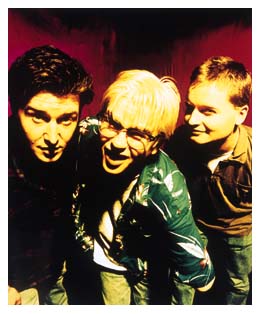
Last, ooh… Saturday, saw the ten year anniversary of my purchasing On the Turn by Kerbdog. In the grand scheme of things, the album is just another one from a forgotten nineties rock band. Kerbdog were an Irish quartet who were signed to Fontana/Mercury at an early age, and released their eponymous debut in 1994. At some point between then and 1996, one of their guitarists, Billy Dalton, left and the band continued as a trio. They got close to the top forty with one or two singles from the Kerbdog album; I guess the biggest one was a tune called ‘Dummy Crusher’ (actually got to #37).

They sounded superficially rather like Metallica did at that stage (growly singing, meaty riffs), just not as good. The songs were energetic and much of a muchness: fine for live performance, for which the tracks had been written in the first place. They started out with little in the way of expectation and, by their own admission, apparently just wanted some beer money.

I first happened upon them in late 1996. As a regular reader of Metal Hammer magazine, I noticed that the mag was fond of Kerbdog, and eagerly awaiting the release of their second album. Like the second Machine Head1 album, On the Turn was due to be released in the latter period of that year, but eventually snuck out in late March 1997. The Machine Head album, The More Things Change…2, was delayed because Robb Flynn was a perfectionist in terms of how the mix sounded. I think Kerbdog’s album was finished and they were just jerked around by their label; it does actually say 1996 on the case.

Whatever the case, I first heard one of their songs on cable music channel The Box, of all places. It was lead single ‘Sally’ and, though I only caught it once or twice (who’d have thought Kerbdog weren’t as popular among phone-in requesters as Spice Girls?), the band definitely had my attention.

The pivotal moment in my history as a Kerbdog fan came with the advent of a free cover-mount Metal Hammer CD. Killing Cuts vol. 1, I think it was. Spring 1997 was a great season to be a teenage rocker, and the CD reflected it. Nestled alongside such Hammer favourites as Entombed and, err, Bodycount3, was Kerbdog. Specifically, a song called ‘Pledge’.

The band had released three singles by this point (and ended up releasing no more, ever), and this was simply an album track, but I was so impressed that I knew I was buying the album on the release date. I was excited for it in a way that I so rarely am nowadays, especially for albums by bands I am not already a major fan of. I blame the internet.

Back to the song: it had solid, heavy-but-melodic, riffs (at one point seeming to quote the intro to ‘Ace of Spades’)4, and the singing was pretty cool. The chorus was the point when I started really being impressed, though; it captivated me with a deceptively simple vocal melody/backing vocals combination (one device singer Cormac Battle seemed very fond of was singing a line and holding the last syllable for the duration of the next line). The love was complete after the second chorus, when the middle eight struck and I was introduced to the gorgeous harmonies that, again, would prove cornerstone to the Kerbdog sound. It turned me on, and I couldn’t wait for the end of March to roll around.

…And roll around it did. I steamed over to the local HMV, in a hyper-excited mood, and found it for a penny under a tenner. Chuffed, I also got the debut EP from then-relatively unknown California funk-rock group (though way better than that label implies) Incubus. That year March 31st was a more pleasant proposition than its 2007 equivalent, a fittingly summery day that complemented my purchases perfectly.

I’ll refrain from going into detail on the album right now because I have a 1997 top twenty in the pipeline for some point this year. I will say this, though: while the first half of the album is markedly better than the second, each song has something to recommend it. The finale, the seven minute ‘Sorry for the Record’ may be the best thing on there.

For the most part a slow song filled with regret (‘…in an air of self disgrace / my mouth is dry despite your wine’), the tempo picks up halfway through for a wondrous passage of exquisitely tight vocal harmony. And I mean of a level way beyond Alice In Chains5 and not seen again in rock til Lift To Experience turned up in 2001. This segment subsides, its existence all too fleeting, and gives way to a gradually increasing reverberation of noise. Initially just a louder-and-louder replay of the existing riff, the static builds and relents into feedback. In a nice touch, the feedback decays, the disc finishing with Cormac’s disembodied voice, a ghost in the machine, reciting the opening line of the album.

As with a lot of my favourite albums, this one took a while to really establish itself in the pantheon. Reasonably similarly-styled albums came and went, some (by NOFX and Kilgore) built their own momentum while others (Life Of Agony, Second Coming, Liberty 37) left with not much to say. On the Turn stands on its own, a strange mix of Beach Boys harmonies, gigantic guitars (and I mean way heavier than Metallica or Megadeth were selling at the time) and a strange sense of underground crunch.

When Metal Hammer (specifically Dan Silver) reviewed the album, references were made to D.C. hardcore, while a regular journo referent of the time for them was Minnesota’s Hüsker Dü. Personally, I thought they sounded more like a much heavier Sugar (who I was exposed to just after getting into Kerbdog); like if Copper Blue had reason to be released through Roadrunner or even Amphetamine Reptile, rather than Creation6. Battle’s vocal timbre was oddly reminiscent of Mould, even down to that slightly nasally-congested delivery. Away from the harmonies, and the Hüsker Dü comparisons seemed more apt: Battle sang with a passion that sent him more often than not into screaming territory.7

Hmm, I’m reviewing the album again. Rest assured, I love it, and likely always will. As well as being a ferociously emotional album with riffs and vocal harmonies that outstrip anything from Cheap Trick to the Wildhearts, it reminds me of being sixteen; of summers days and that joy of discovery.

* * *

It didn’t end well for the band. Due to the delayed release of the album, their promotional tour came and went before the album hit shelves. They didn’t tour again before getting dropped by the label in late 1997, then splitting. They were one of the key bands whose lack of success annoyed me intensely, even though they were a touch too heavy for the mainstream (which admittedly was coming out of the Britpop doldrums, what with the second Supergrass album, the self-titled Blur one – better than what preceded, at least – and OK Computer), and Radio 1 had long ditched their rock show.

Battle (along with Kerbdog drummer Darragh Butler and new bassist Mick Murphy, who filled Colin Fennelly’s shoes) returned in late 1998 with ‘No Worries’, the debut single from new band Wilt. Post-Kerbdog depression was reflected in the ensuing albums songs (such as ‘Peroxatine’), despite protestations that ‘nothing is important / everything’s all right’. While brimming with catchy pop rock gems, Wilt overall seemed a tad deflated, beaten down by the stresses of getting messed around by an uninterested major label (come on, even in Metal Hammer, the album only got a quarter-page ad somewhere in the back of one issue).

After a couple of years and one more album (My Medicine, 2002), Wilt faded. Kerbdog actually reunited briefly in 2005, but the scattered shows either flew under my radar or were in Ireland at a time when money was too tight for me to mention (and if they play again, I will most definitely make the trip).

Whether I end up seeing them or not, I’ll always have this album. It’s served me well this last decade, through the bad times and the good. I just thought it might be nice to take a moment to remember this classic album that, to paraphrase Bill Hicks, has enhanced my life over the years. If, by any chance, someone ends up getting into the album from this (doubtful), or it warms the heart of any band members/fellow fans (even more doubtful), then it’s worth the time spent writing. And if not, just sifting through these memories has been a joy in itself.

Download: ‘Pledge’

1 A band who also debuted in 1994, though to more of a fanfare.
2 An amusing title in hindsight as, the more Flynn had messed with the superficial sound of the instrumentation, the more it stayed with the gruff urban-metal template the debut had popularised.
3 Surely you remember Ice T’s rap metal band. The included song, ‘I Used to Love Her’, is actually worth hearing.
4 The album was produced by GGGarth (known for the Rage Against The Machine debut), so this had metal-heavy guitars that came without sacrificing the pop accessibility.
5 Save, perhaps, the heartbreaking ‘Rotten Apple’, off Jar of Flies (1994).
6 Incidentally, I just did some research on Battle, and it transpires that this is his favourite album ever. That explains that, then.
7 OK, maybe there is also a touch of Helmet in their sound.

Film Review: 300

Zack Snyder (2006)
I like a variety of films. I like film adaptations of comics and graphic novels. This film, though…

And I don’t really know where to start with it, either, as everything that could be wrong with this film is wrong with it. Perhaps I should take a look at 300 in the many different ways it can be viewed, beginning with the least relevant and ending with the most offensive crimes against art, entertainment and taste.

300 fails as a historical document. This almost goes without saying, but I would hate for any of the millions of this films viewers to take it particularly seriously. I mean this in terms of the Spartans allegedly fighting for freedom and truth, against the ‘barbarians’ of the east. This essay deals with the historical inaccuracy of the film quite nicely: ‘Orientalism (and Fascist Aesthetics) for Beginners’. Anyway, the gist of it is that the Spartans were a pretty fascist bunch; little to do with the democratic Athenians, and to pretend such an empire as Persia’s could have existed based entirely around slaves and barbarism is insane.

300 fails as a graphic novel translation. This is quite an odd indictment because, for the most part, it is in complete thrall to the graphic novel it is named for. The script features many lines lifted directly from speech bubbles, and some of the camera angles are semi-live action takes on art panels. Interestingly, where the film deviates from the book, it fails so spectacularly as to hurl itself down that bottomless pit they have in Sparta.

First and foremost in the ill-advised cinema-only moves is the reduction of Queen Gorgo (Lena Headey) to a piece of Hollywood stereotype tat. In the comic, she is as hard-nosed as Leonidas (Gerard Butler); early in the film, she is the one who gives the nod to drop the Persian messengers into the pit. Somewhere along the line, though, she softens up. She gives Leonidas a keep-sake in a moment of out-of-character sentimentality. Most worryingly, she is very willing to submit to the sexual desires of some scheming politician (Dominic West) who was shoved into the story.

Gorgo gets her ‘revenge’ in the form of outing Scheming Politician as a traitor in the most ridiculous added scene in the film. Deciding the screenplay was lacking in filibusters, Gorgo addressed some old Spartans in a painfully contrived bit of fluff. Shortly after essentially being raped by Scheming Politician, she is able to smirk through a rousing speech that seemed to serve no purpose at all. Most amusing is the death of Scheming Politician in this scene; his wallet releases golden coins as his corpse hits the floor. And those coins bear the head of Persian king-god-emperor Xerxes (Rodrigo Santoro)! Seems he should have done a bit more scheming, like perhaps leaving money at home if it had Xerxes heads on it.

Missing was the detail of deformed Spartan turncoat Ephialtes (Andrew Tiernan) attempting suicide when it became apparent he wasn’t suitable for the phalanx. Admittedly, his survival after apparently dropping off a cliff was rather surprising, but that’s nothing on what was allowed into the film (more on that later).

(Not all changes were negative. Thankfully, a rather embarrassing sequence in the book, wherein mighty leader King Leonidas starts punning on names of his soldiers (‘Stumblios’ – hilarious) is stricken from the record. It was pointed out to me that the stanza in the comic served to show, as he beat up a few of his own soldiers, that Leonidas values Sparta over individuals. Sure, but the very fact that he is willing to lead three hundred of his best soldiers into certain death is sufficient evidence of that.)

I should probably point out at this stage that I wasn’t all that enamoured with the book in the first place. It won Miller an Eisner award, but that tells me either that the book came out in a poor year, or the award was more of an ‘it’s Frank Miller’ kind of thing. Perhaps Dick Hyacinth can fill me in. The book was fair enough, but very basic. The art was the most impressive thing about it, and the propaganda worked because it was blatantly just that.

In the medium of the graphic novel, it is clearer that what the reader encounters is simply the retelling of the story, as ordered by Leonidas and embellished to a degree one would expect of something that was created to glorify Sparta. However, a piece of work that just successfully walks the tightrope in its original form plunges to its doom when placed in another medium for which it was not originally intended.

When the action is in motion, and cameras place the audience in the heat of the battle, the emphasis moves from ‘tale being told’ to ‘document of what happened’, over the top narration or no. People wonder why certain graphic novels should never make the jump to film, and this evinces that feeling nicely. Sin City worked because the source material was so film-inspired, had such kinetic artwork and actually documented the events of the piece.

So we’ve established that the film is historically fraudulent, and that it is a poor translation of a book that wouldn’t have worked as a film in pretty much the best case scenario. Anyway, benefit of the doubt and all that. Perhaps it works as an over the top film on its own merit. Unfortunately, and most heinously…

300 fails as an overblown piece of Hollywood schlock. Yes, the worst crime perpetrated by this explosion of Miller and Snyder’s psychological semen onto the formerly silver screen.

The two real problems with this film, in and of itself, are somewhat intertwined. The first is the lack of peril. Anybody who knows anything knows that the art of telling a good story is in the peril facing the protagonists. And also conflict, but that usually manifests as peril anyway. When trying to suggest the fascist kiddy-fiddling Spartans are fighting for the last vestiges of truth and honour in an otherwise chaotic world (awesome, Al Qaeda say the same thing), it might be pertinent to get the viewer to invest emotionally in their struggle.

Painting the Spartans as a bunch of muscle-bound, sarcastic pricks with bizarrely quick minds for dry one liners (the latter a fault of Miller’s) is not the way to do that. Most of the film is spent telling us that the Spartans cannot lose. Leonidas can speak all he wants about their impending doom being a lesson for Greece, but if we don’t see anything to back that up, it’s just hot air.

So when battle commences, the Spartan phalanx tears through the initial grunts, and that is to be expected. However, one would have thought an armoured rhinoceros (not part of the Persian army then or now) might cause them some damage. Apparently not, as a finely aimed spear throw causes it to die, ineffectually, and its carcass stops skidding through the dust a few centimetres away from the Spartan shields.

The biggest crime against drama is when the Immortals head into action. They get bigged up as the proper wrecking crew of the empire’s army (‘one hundred countries’, let’s not forget). They wear excellently dehumanising silver masks and they really look the part; like Satan’s own band of ninjas. They start ‘fighting’ and just drop without much of a struggle. I don’t buy the ‘well, they should have waited til we were more injured’ excuse. It’s just a massive anticlimax and lack of danger for the duration of the film. And the fighting, while adequate, is largely disappointing: Leonidas’s run of solo fighting is somewhere below that of Optimus Prime in Transformers: the Movie on the list of one-man heroic rampages.

Most bizarre, apart from the complete lack of threat facing the Spartans, is the collection of mutants and monsters in the army, as though Asians are somehow sub-human. That the Immortals wear masks at all is a mystery when, as one loses his face-wear, they seem to have grey reptilian faces anyway. Then we have film-only confections like that strange mutant giant who duels with Leonidas for a minute (and why are 99% of deaths in the film picture-perfect decapitations?) and the even more bizarre – like, ripped straight from the ROM of the Doom video game. Seriously, there is a gigantic monster with blades instead of hands whose only job seems to be to assassinate generals who disappoint Xerxes. Word of advice to king-gods everywhere: send these blokes into battle. He’d have killed three hundred Spartans on his own.

All of which brings us to the king-god in question: Xerxes. Was it necessary to turn him into a shaven-headed RuPaul? He minces around most of the time like he’s misplaced his Maybelline, and seems to just fancy Leonidas. I have nothing at all against camp dudes, but that would be low on my list of necessary attributes if I was to create a threatening, barbaric king-god who was taking over the world. And Leonidas can accuse him of ‘hubris’ all he wants, but if I was nine feet tall with a voice several octaves lower than Phil Anselmo, I’d probably think I was at least a demi-god.

That said, the film isn’t all bad. There are times when the visual aspect reaches the lofty expectations promised by the trailer (has there ever been a trailer so much better than the film? It had Nine Inch Nails on its own mini-soundtrack, too), like when the storm of the gods is wreaking havoc on the Persian navy. That was pretty damn awesome. The Spartans themselves were in pretty good shape too, even if one or two of them reminded me of pro wrestler Triple H (again, there is no sense of peril if all Spartans tower over 99.9% of their enemy). Headey is properly beautiful, even if I spent a lot of the film trying to remember from where I know her name.

And I say all this as a fan of comic films in general. I loved Batman Begins, X-Men 2 and Akira. I have no issue with senseless violence or campfests; I have watched enough UFC and fake-fighting in my time, as well as spending enough time in gyms, that this negativity is not borne out of any Guardian-esque, pencil-necked embarrassment at seeing burly men in their pants. No, this film is just complete rubbish.

All in all, this was a pretty dismal failure on all fronts. What is most frightening is that this debacle occurred with Frank Miller on board as Executive Producer (I don’t know how hands-on he was, but he must have at least given it the nod). Director Zack Snyder’s next project is a translation of graphic novel classic Watchmen, which is an infinitely more complex book, and one whose success is even more tied to its original medium. And that’s going to be without its creator Alan Moore on board in any fashion. As bad as this was, I live in dread of that one.